




Rewarded user acquisition (Rearded UA) is one of the most effective methods for driving installs, engagement, and retention in the app ecosystem. By offering users tangible rewards in exchange for completing specific actions, apps can capture attention in a crowded market and keep users engaged for longer periods of time. Yet, as powerful as this approach is, it is not a plug-and-play solution. The most successful rewarded campaigns are not simply launched and left to run—they are continuously tested, refined, and optimized based on data.
In a landscape where user preferences shift quickly and acquisition costs keep climbing, data-driven testing has become the cornerstone of sustainable rewarded user acquisition strategies. It allows marketers to identify what resonates with their audience, what creates friction, and where opportunities for growth lie. Optimization ensures that campaigns remain relevant, efficient, and profitable over the long term.
Why Testing Is Essential in Rewarded User Acquisition
Rewarded offers have multiple moving parts. There’s the type of reward being given, the value attached to it, the format of the ad or offer, the placement within the app, and the timing of when it is presented. Even small changes in any of these factors can significantly impact user behavior. For instance, increasing the size of a reward may improve acceptance rates but could also reduce the perceived value of in-app purchases. Offering rewards too frequently might boost short-term engagement but harm long-term retention.
Without testing, marketers are left guessing which combination will deliver the best results. Testing transforms that guesswork into data-backed decisions. By systematically experimenting with different variations—whether it’s reward values, ad creatives, or placement strategies—apps can uncover insights that drive measurable improvements in performance.
Key Areas for Experimentation
One of the strengths of rewarded user acquisition is its flexibility. This flexibility also creates a vast range of opportunities for testing.
Reward value is one of the most obvious levers. Do users respond better to a small, frequent reward or a larger, less frequent one? Testing different reward levels can reveal the sweet spot where engagement is high without damaging app economy.
Reward type is another critical factor. While coins or currency are the most common, some users may find more value in time-saving boosts, exclusive items, or cosmetic upgrades. Non-gaming apps may experiment with offering premium features, trial extensions, or even discounts on subscriptions.
Placement and timing can be just as influential. A rewarded video offered after a level completion may perform very differently than one shown when a user fails a level. Similarly, placing offers during onboarding may encourage early engagement but could overwhelm new users if introduced too aggressively.
Finally, creative and messaging should not be overlooked. The way the reward is framed—“double your rewards” versus “claim your bonus”—can change user perception and acceptance. Testing different ad creatives, copy, and visual styles ensures that the presentation feels compelling rather than repetitive.
Building a Framework for Testing
Running effective experiments requires structure. The first step is to define a clear goal for each test. For example, is the objective to increase offer acceptance, improve retention, or boost revenue per user? Without a defined goal, it becomes difficult to measure success.
Next comes forming a hypothesis. A simple hypothesis might be: “If we increase the reward by 20%, more users will complete the offer, leading to higher Day 7 retention.” This hypothesis provides a direction for the test and establishes expectations for outcomes.
Once the hypothesis is set, marketers should identify the key metrics to track. These may include acceptance rates, completion rates, retention metrics (Day 1, Day 7, Day 30), average revenue per user (ARPU), or lifetime value (LTV). Depending on the test, secondary metrics such as churn rate or ad fatigue may also be important.
With goals, hypotheses, and metrics defined, the actual testing can begin. A/B testing is the most common method, allowing one group of users to experience the current setup while another group experiences the variation. It’s essential to ensure that sample sizes are large enough and that tests run long enough to capture meaningful data, including mid-term and long-term effects.
The Role of Optimization
Testing is only half the equation; optimization is what makes testing worthwhile. Once results are analyzed, campaigns should be adjusted accordingly. If one variation proves successful, it can be rolled out more broadly. If a test produces mixed results, further refinements or follow-up experiments may be necessary.
Optimization is not a one-time effort. User behavior evolves, seasonal trends shift, and competitors may introduce new experiences that reset user expectations. What works today may not perform as well six months from now. This is why continuous optimization, powered by ongoing testing, is the only sustainable path to success.
Tools and Infrastructure for Success
To execute data-driven testing effectively, apps need reliable infrastructure. Analytics platforms that provide granular insights into user behavior are essential, as is a robust attribution system to understand the link between rewarded actions and downstream outcomes. Experimentation platforms or feature-flag systems can simplify the process of rolling out different variations to user groups.
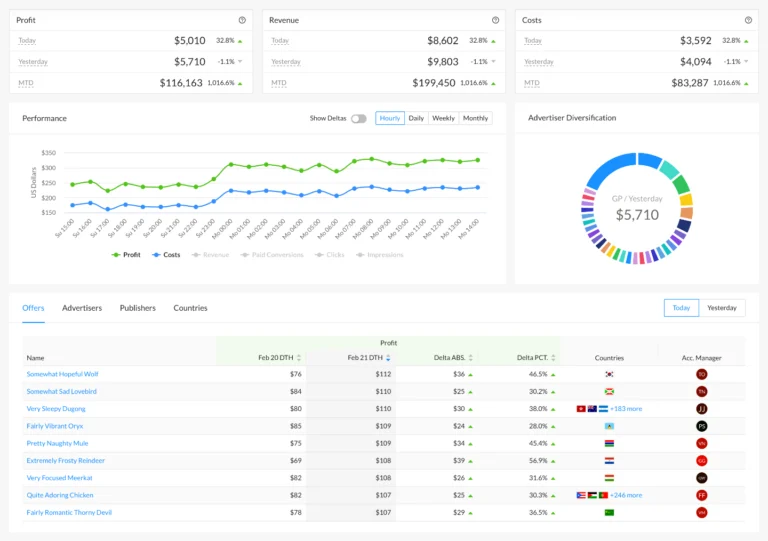
In addition, real-time dashboards allow teams to spot unexpected issues quickly, such as technical errors or sudden drops in completion rates. Combining quantitative data with qualitative insights from user feedback creates a well-rounded understanding of how users experience rewarded offers.
Scaling Rewarded User Acquisition with Confidence
One of the benefits of a data-driven approach is confidence in scaling. When a campaign has been tested and optimized, marketers can scale it to larger audiences with reduced risk. However, it’s important to monitor for diminishing returns as campaigns expand. What worked in a smaller, more homogenous user group may not deliver the same results across diverse markets or devices. Regularly retesting and adapting ensures scalability without sacrificing effectiveness.
Conclusion
Data-driven testing and optimization transform rewarded user acquisition from a simple transactional tool into a dynamic growth engine. By systematically experimenting with reward types, placements, timing, and messaging, marketers can uncover what truly resonates with their users. Optimization ensures that insights are acted upon, campaigns remain fresh, and ROI continues to improve.
In a digital landscape defined by constant change, testing is no longer optional—it’s a necessity. Apps that commit to a culture of experimentation will be the ones that not only acquire users but retain and monetize them effectively. Rewarded user acquisition, when powered by data, becomes more than a strategy for growth—it becomes a long-term competitive advantage.